
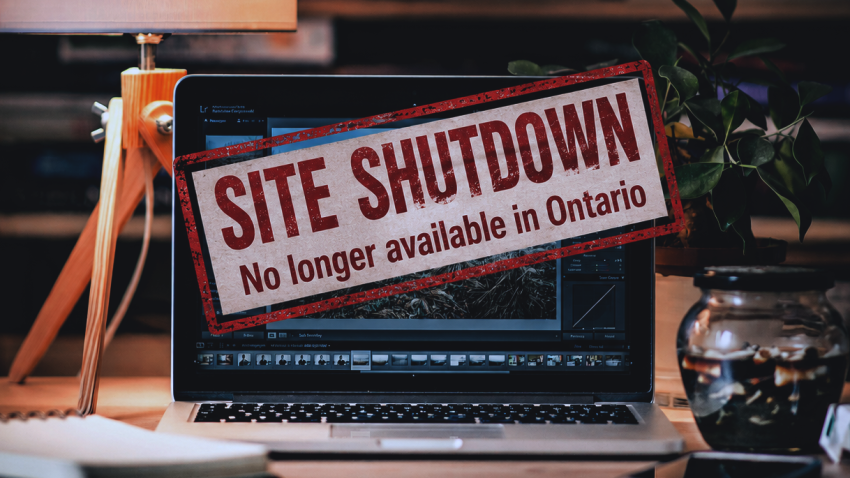
A few weeks back I noticed Casumo’s app icon still sitting on my tablet, except the site behind it had turned into a shutdown notice. Not long before that, Conquestador did the same thing. Two operators, gone within about two weeks of each other, and both had been perfectly normal, licensed options in Ontario for years.
So I did what I usually do when something like this happens: I went to check “the AGCO’s registrant list” to see exactly what changed and when. That’s where things got a little less tidy than I expected.
There isn’t really a changelog
If you go looking for a single AGCO page that tracks additions and removals with dates, you won’t find one. AGCO’s own registrant page for internet gaming operators points you straight to iGaming Ontario’s operator directory instead. That directory is a live snapshot — currently sitting at 48 operators running 83 gaming sites, as of its early-August update — not a running log of who joined or left and when.
That’s not a flaw, exactly, it’s just not built the way I assumed. And it matters, because “AGCO registrant” and “operator on iGO’s public list” aren’t quite the same thing. Getting into Ontario’s regulated market is a two-part process: a company registers with AGCO as the regulator, then separately signs an operating agreement with iGaming Ontario, the Crown agency that actually manages the commercial side. You need both pieces in place to show up as a live, playable brand. So a company can lose its spot on that public directory without the reason being “AGCO kicked them out” — and in every recent case I could actually verify, that’s exactly what happened.
Two exits, two very different experiences
Conquestador’s Ontario site went dark on April 13, with a notice saying the shutdown was purely a business call, unrelated to any regulatory or compliance problem, and that players had six months from that date to submit withdrawal requests.
Casumo’s exit was slower and more scripted. Ontario players got email notice starting April 1. New account registrations were cut off from that date. Minimum withdrawal amounts kicked in during the wind-down. There was a hard cutoff for claiming pending bonuses, a separate cutoff for new deposits, a final day for actual play, and then account closures roughly two weeks after that.
Compare that to Rivalry, a Toronto-based operator that also disappeared from regular play earlier in the year — but under different circumstances. Rivalry paused all player activity in February amid financial trouble, said it was returning player funds, and by spring had lost most of its executive team while it looked at a possible sale or restructuring. No tidy calendar of deposit cutoffs and closure dates that I found — just a company in genuine distress trying to work out what came next.
Same basic outcome from the player’s side — an operator you used to play on is no longer available — but two pretty different paths to get there. That’s worth sitting with for a second, because it also means there isn’t one universal “here’s what happens” script you can memorize and apply the next time it happens to you.
The version that hasn’t happened lately
Worth being precise about something: an operator can also lose its registration because AGCO suspends or revokes it for a compliance failure, rather than the company choosing to leave. That’s a real enforcement tool available to the regulator, with meaningful penalties attached for serious violations. I didn’t find a case of that actually happening to an Ontario igaming operator recently — the exits I could verify were framed by the operators themselves as business decisions, and Rivalry’s was financial distress rather than a regulatory action. So if you ever do see an operator vanish and the notice reads differently than the Casumo/Conquestador template — more clipped, less “thanks for your support” — that’s a reasonable moment to read the fine print a bit more carefully than usual.
What I’d actually check if it happened to me
If a site I played on suddenly wasn’t there, here’s the honest list of what I’d look at, in order: my email, for whatever notice they sent before pulling the plug; my account balance and transaction history, screenshotted, before anything gets locked down; and whatever withdrawal deadline they’ve posted, since Conquestador gave six months but there’s no rule saying every exit gives you that long.
One thing that doesn’t hinge on any single operator’s survival: self-exclusion. BetGuard, Ontario’s centralized self-exclusion tool, covers every registered operator at once, so it isn’t something you’d need to redo if one particular brand leaves the market.
Ontario’s operator count moves around more than a single number suggests — it was 46 back in April, and iGaming Ontario’s own directory shows 48 now, with new brands launching around the same time others were winding down. An industry analyst quoted in trade coverage called it “ebb and flow” rather than a market in trouble, and the wagering and revenue numbers reported alongside these exits back that up. None of which is much comfort if the operator that leaves happens to be the one you had money sitting in — which is really the only scenario that matters if it’s your account.
Slots are entertainment, not income, and no amount of research or experience changes the math underneath the game. The Responsible Gambling page has more on that, along with support options in Ontario if you ever want them.